The simple version
Think of Polymarket as a market for narrow event questions rather than a market for companies. A question might be “Will a city record more than 10 rainy days next month?” The market has two sides: Yes and No. Buying one side means taking a position on that answer, not owning a piece of the city or the event.
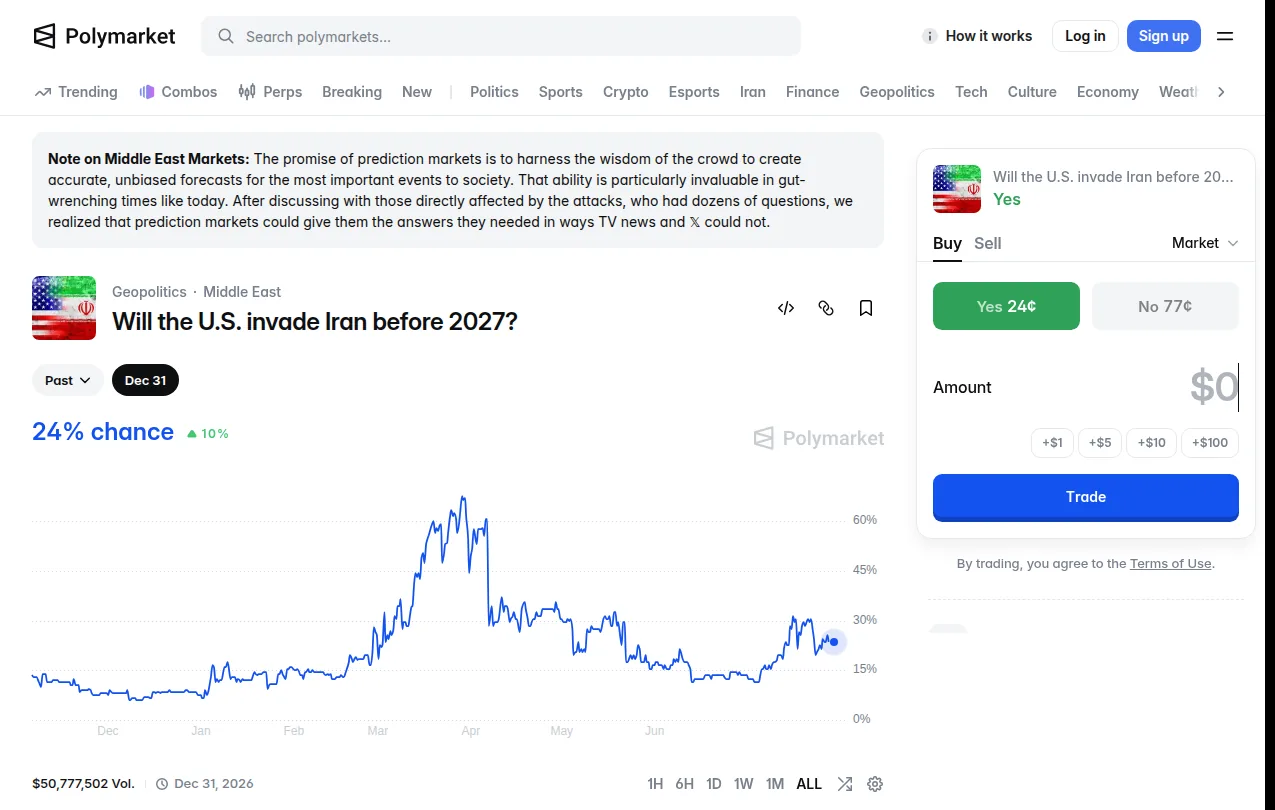
Polymarket’s current documentation describes a market as a binary question with Yes and No outcomes. Related questions can also sit under one event. For a beginner, the useful distinction is simple: first identify the exact question; then decide whether the price and the written rules make sense to you.
What a Yes or No share means
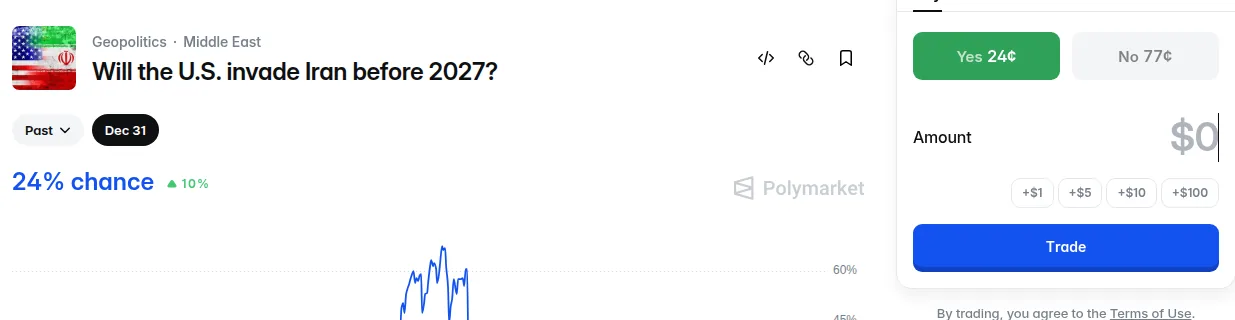
Example: Yes is trading at 40¢. Buying 250 Yes shares costs about $100 before applicable costs.
If the market resolves Yes: 250 winning shares redeem for about $250, so the gross profit is about $150 before applicable costs.
If the market resolves No: those Yes shares are worth $0, so the maximum loss is the amount paid for them.
This is the cleanest way to separate three numbers that beginners often mix up: stake is what you paid, payout is what winning shares redeem for, and profit is payout minus stake and any applicable costs. The Profit and Payout Calculator lets you test the arithmetic with your own price and amount.
Why the price matters
A 40¢ Yes price is commonly read as a market-implied 40% chance. That interpretation is useful because it turns a changing event question into one number you can compare with your own view. It is not a claim that the real-world chance is objectively 40%.
| Screen price | Meaning | Not guaranteed |
|---|---|---|
| Yes at 40¢ | About 40% implied chance. | You can buy at 40¢. |
| Best ask: 43¢ | Lowest visible sell offer. | Enough shares at 43¢. |
| Best bid: 37¢ | Highest visible buy offer. | You can sell all shares at 37¢. |
Polymarket documents that the displayed value is normally the midpoint of the best bid and ask, while a buyer pays an available ask and a seller receives an available bid. In our view, this is the distinction most beginner explanations miss: a market can be a useful information signal while still offering a worse executable price than the headline number.
Use the Price and Probability Calculator to translate a cents price into the implied probability, then read How to Read a Polymarket Market Page before treating any single displayed number as a tradeable quote.
Why people watch or use markets
Prediction markets are useful because they isolate one event. Someone who has a view about a specific election, policy deadline, sports result or economic release can look at a direct outcome question instead of taking indirect exposure to an entire company, sector or index.
They also make disagreement visible. If you think a 40¢ price understates an outcome, the useful next question is not “am I certain?” It is whether your reasoning is stronger than the information and incentives already reflected in the market. That is why prices can be valuable even for readers who never place an order.
The distinction most beginners miss
A displayed probability is not an executable price and neither is a guaranteed forecast. The displayed number can be a midpoint or, when the spread is wide, a last trade. Your order may fill at a different price, only partly fill, or wait for another participant.
This matters most in a thin market. A 65¢ screen price can look precise, but a wide gap between bids and asks says the next buyer and seller do not agree closely. Read the order book and the market rules before treating the headline number as the whole story.
What decides the result
When the event is ready to resolve, the written market rules decide how the result is determined. They specify the resolution source, timing and edge cases. The headline is a summary; the rules are the contract readers need to understand.
After a standard binary market resolves, winning shares redeem for $1 and losing shares are worth $0. Before taking a position, read the rules closely enough to answer: what source decides the result, when can the market resolve, and what happens if the obvious headline answer is ambiguous?
Bottom line
Polymarket turns a specific future question into Yes and No shares whose prices reflect current market expectations. The useful part is the direct exposure to one outcome and the live probability signal; the practical constraint is that price, liquidity and resolution rules all matter. Start by reading a market page, then compare the displayed probability with the actual bid and ask before drawing a conclusion.
Related guides and tools
Explore current markets with the Market Explorer
Browse live questions, then use the market-page guide to check the rules, price and available activity before drawing conclusions.
Availability and eligibility depend on your physical location.
Frequently Asked Questions
Is Polymarket a betting site?
Polymarket markets let participants buy and sell outcome positions with one another, so the interface works like a market rather than a bookmaker setting one fixed wager. A position can still gain or lose value based on a real-world outcome. How a product is classified or available can vary by jurisdiction and product.
Does a 60¢ Polymarket price mean a 60% chance?
It is the market-implied probability: participants are currently valuing that outcome at about 60¢ per share. It is useful as a live signal of market expectations, not an objective forecast or a guarantee that the event will happen.
What does a winning Polymarket share pay?
For a standard binary market, a winning Yes or No share redeems for $1 after the market resolves, while the losing outcome is worth $0. Your profit depends on the price you paid, not simply on the $1 payout.
Can I sell before a Polymarket market resolves?
You can try to sell before resolution if another participant is willing to buy at an acceptable price. A visible price does not guarantee that your order will fill at that price, especially in a thinner market or for a larger order.
What matters more: the market title or the rules?
The rules matter more. They define the resolution source, timing and edge cases. The title tells you the broad question; the written rules determine what result counts for that market.